The Blood of Dawnwalker DLSS 5 Guide — Requirements & One-Click Setup — Wiki & Guide
Published 2026-09-174 min read
How to enable DLSS 5 in The Blood of Dawnwalker: GPU and driver requirements, the one-click deployment tool, and what the before/after image quality jump actually looks like.
DLSS 5 is the kind of leap that gets screenshotted across the internet: AI-driven image generation that pushes rendered frames toward photoreal, with the line between "game" and "photograph" getting genuinely hard to call. The Blood of Dawnwalker benefits from it more than most — Rebel Wolves' moody, candle-lit valleys are exactly the kind of content the upscorer feasts on. This guide walks through the requirements and the fastest setup path.
What you need before starting
- An RTX 40-series or 50-series GPU. DLSS 5's feature set is limited to Nvidia's current two generations. Older cards stop at earlier DLSS versions.
- The latest driver, installed first. Update through Nvidia's own app or website before touching anything else — a stale driver is the number-one cause of the crashes and stutter people report after enabling new DLSS features.
- The game, installed and run once. The deployment tool below detects the game by its process, so having it launched (or at least installed) smooths the handshake.
One-click deployment
The quickest route is a third-party one-click deployer — the sort of tool (Xmod and its equivalents) that keeps a library of community configurations and applies them without manual file swaps:
- Open the deployer and find the tool's game page for The Blood of Dawnwalker.
- Hit deploy. The tool identifies the running game process and installs the DLSS 5 configuration automatically.
- Switching games later? The same page lets you select another title — the tool re-checks the process and re-deploys with one click.
Manual installation is, of course, possible — DLSS DLLs can be swapped by hand — but the deployer's appeal is obvious: no version hunting, no folder spelunking, and a repeatable process for the next game on your drive.
What the upgrade actually buys you
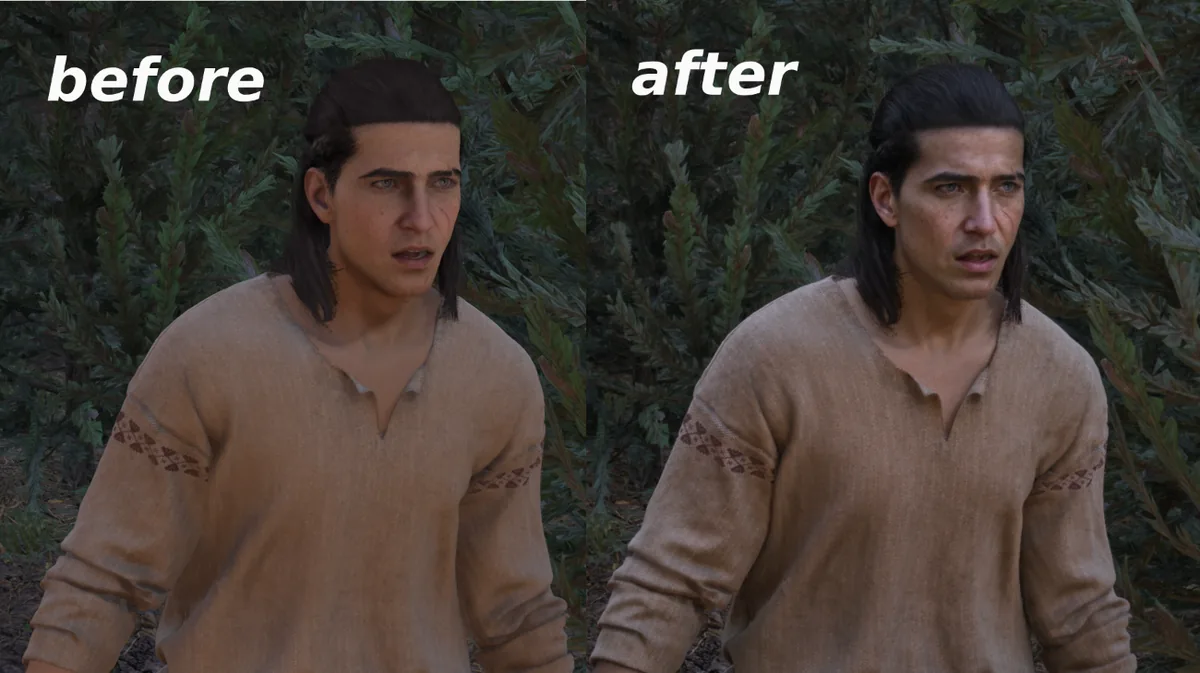
Side-by-side, the difference is not subtle. Foliage resolves into individual leaves instead of shimmering mush, fabric and leather gain texture weight, and faces — already the best-looking part of the game — lose the last of the upscaled softness. In motion the frame rate benefit stacks on top: DLSS 5's cost is a fraction of native rendering, which is precisely what lets mid-range RTX 40 cards hold high framerates in a game this dense.
Two honest caveats. Third-party tools are third-party tools: source them carefully, and let your antivirus do its job. And if a deploy ever misbehaves — crashing on launch, artifacts, driver resets — the fix is the boring one: reinstall the newest driver cleanly and re-deploy.
For more ways to make the valley look and run its best, pair this with the transformation system guide — wolf-form travel at a stable framerate is the single best way to see Vale Sangora's nights.
Keep reading: